Beyond the Five Eyes
Or, Canada globetrots to expand intelligence sharing




Over the past 18 months, Canada has been busy laying the foundations for a much broader network of intelligence sharing arrangements, a diversification strategy that mirrors efforts in the economic domain. The intention is to lessen dependence on the US-dominated Five Eyes arrangement, especially at a time of rising uncertainty over the politicisation of US intelligence, without compromising Canada’s ongoing seven-plus decades relationship with the core four—US, UK, Australia and New Zealand.
The general instrument for these new relationships is a bilateral treaty generally referred to as a “Security of Information Agreement,” which allows for protocols governing the sharing of classified intelligence and information. These agreements also facilitate economic opportunities in a variety of defence sectors, where the security of information must be maintained. Such treaty arrangements have been around for a long time, and the list of countries with which Canada has established bilateral security arrangements is long. It is dominated by ties with European countries, but includes one lone Middle Eastern state, Israel, one African country, South Africa, and two Latin American countries, Brazil and Chile. [1]
What is notable about the recent push is the acceleration of treaty arrangements, the more explicit focus on intelligence sharing, and the way they have reached into the Indo-Pacific to include Japan and South Korea. No less than eight such arrangements have been entered into since December 2024, effectively since the coming of the new Trump administration in the U.S.
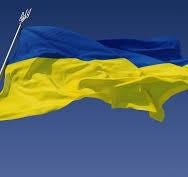
The march began with an agreement reached with Ukraine, signed during a meeting of NATO foreign ministers in Brussels. [2] The accompanying news release noted that its signature reaffirmed Canada’s commitment to supporting Ukraine by “deepening bilateral security cooperation and increasing information sharing and defence collaboration between Canada and Ukraine.” [3]
One recent example of how the agreement has facilitated industrial defence cooperation is the partnership forged between a Hamilton, Ontario- based drone manufacturer, Sentinel, and a Ukrainian company, Airlogix, to manufacture drones in Canada for the Ukrainian armed forces. [4]
Next up was Poland, with an agreement signed in Warsaw on January 16, 2025. The Polish signatory was the head of Poland’s Internal Security Agency (ABW). The agreement was accompanied by official statements about its importance in facilitating new defence industrial partnerships in sectors such as aerospace, marine, nuclear and space, while “increasing information sharing and collaboration with Poland.” [5]
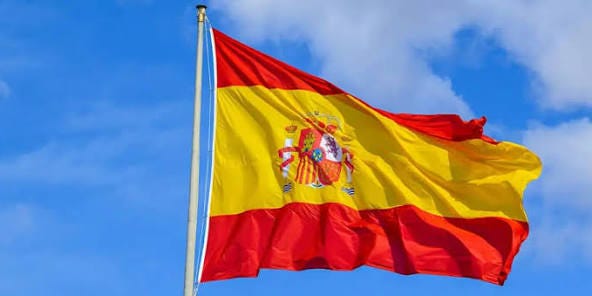
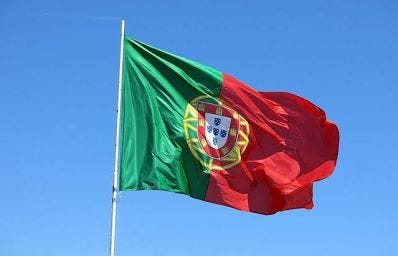
Canada shifted to the Iberian peninsula for its next set of agreements, with Spain and Portugal, in September 2025. The General Security of Information Agreement with Spain was signed by Canada’s ambassador to Spain and by the Secretary of State for the Spanish National Intelligence Center (CNI). [6] The CNI is the central agency for Spanish intelligence activities and its mission includes promotion of “relations of cooperation and collaboration with other intelligence services.” [7] As the Canadian new release noted, the agreement will “provide the framework for the exchange of classified information with Spain, including defence intelligence as well as sensitive operational information and technical data related to weapons systems.” [8] A similar agreement was signed one week later with Portugal. [9]
Two new agreements were signed with Indo-Pacific countries in early 2026, first with Japan and then with the Republic of Korea.
A security of information agreement with Japan came into force on January 16, 2026. The Japanese Ministry of Foreign Affairs noted that “it is expected that this Agreement will ensure appropriate protection of classified information shared between the two governments and will promote further beneficial information exchanges.” [10] A broader “strategic roadmap” between the two countries was announced on March 6. Included in the roadmap were issues of defence collaboration including the desire to expand consultations on regional security threat assessments. [11]
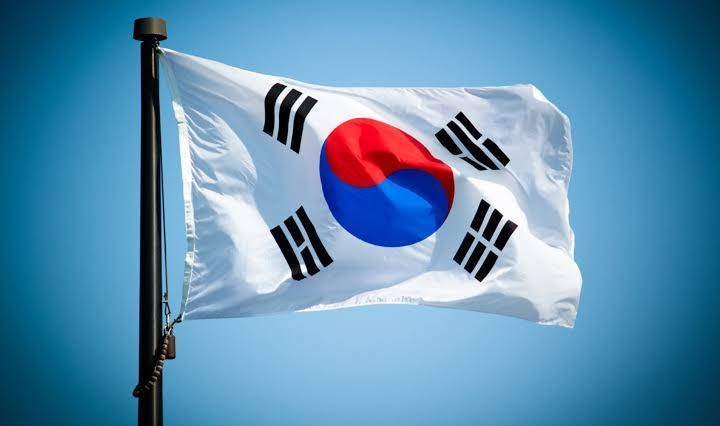
The negotiation with the Republic of Korea leading to an “Agreement on the Protection of Military and Defence Classified Information” were embedded in a wide-ranging statement on Foreign and Defence relations between the two countries. It was pitched as an agreement between middle powers drawing together, while facing a dangerous international environment. The joint Canada-Republic of Korea statement, issued at the Ministerial level on Febnruary 25, 2026, called attention to the threats posed by the Russian invasion of Ukraine and the role played by North Korea is supporting and assisting the Russian attack. It called for an enhanced partnership in the Indo-Pacific, and between the two countries’ militaries. It addressed frontier security issues of mutual concern with regard to cyber threats, rapid technological change, especially in AI, and challenges in the space domain. [12]
The most recent in initiative in the Canadian campaign to sign classified information sharing protocols with foreign partners involved France. This was a product of a visit by the Prime Minister to France in advance of the G-7 meeting (chaired by France), now just underway. Prime Minister Carney, alongside French President Emmanuel Macron, announced a new “General Security of Information Agreement” with the twin purpose of creating stronger access for Canadian firms in the French defence market and enhancing the ability to “exchange classified information between Canada and France across defence, space, aerospace, cybersecurity, AI and maritime systems.” [13]
France has long been thought of as a potential new partner if the FVEYs ever expanded beyond its current establishment. Such expansion seems unlikely in the moment, but a deepened bilateral intelligence relationship with France is a viable alternative, one that can be helped in its implementation by the appointment of the former National Security and Intelligence Adviser, Nathalie Drouin, as Canada’s ambassador to France.
Make no mistake. This flurry of bilaterial treaty arrangements is an instrument of both economic and intelligence diplomacy expanding Canada’s reach into global defence markets and pools of national intelligence. The economic benefits are often extolled in public; the benefits of enhanced intelligence sharing generally muted by secrecy concerns.
Some of the onus on making them work in practice will depend on the ability of the Canadian intelligence community to bring relevant information to the table and find ways of sharing to mutual benefit. The speed with which this will happen will vary across the new information arrangements, from fast with countries like Ukraine and France, to slower with states such as Portugal, where there is not much established practice of intelligence sharing. The most challenging element may well be the new arrangements with Japan and South Korea—involving countries with important access to intelligence in the Indo-Pacific, but where the practice of intelligence sharing is only nascent and where Canada has less to bring to the table.
[1] Government of Canada, “International bilateral security instruments,” https://www.canada.ca/en/public-services-procurement/services/industrial-security/security-requirements-contracting/international-contract-security-requirements/international-bilateral-security-instruments.html
[2] Government of Canada, New release, “Canada signs General Security of Information Agreement with Ukraine,” December 3, 2024, https://www.canada.ca/en/public-services-procurement/news/2024/12/canada-signs-general-security-of-information-agreement-with-ukraine.html
[3] Ibid
[4] Department of National Defence, news release, “Canada and Ukraine sign agreement on drone production,” May 29, 2026, https://www.canada.ca/en/department-national-defence/news/2026/05/canada-and-ukraine-sign-arrangement-on-drone-production.html
[5] Government of Canada, news release, “Canada and Poland sign General Security of Information Agreement, protecting sensitive information and promoting economic cooperation,” January 16, 2025, https://www.canada.ca/en/public-services-procurement/news/2025/01/canada-and-poland-sign-general-security-of-information-agreement-protecting-sensitive-information-and-promoting-economic-prosperity.html
[6] Government of Canada, new release, “Canada and Spain sign General Security of Information Agreement, protecting sensitive information and promoting economic prosperity,” September 9, 2025, https://www.canada.ca/en/public-services-procurement/news/2025/09/canada-and-spain-sign-general-security-of-information-agreement-protecting-sensitive-information-and-promoting-economic-prosperity.html
[7] https://www.cni.es/en/about-the-cni/objectives-and-values
[8] Government of Canada, new release, “Canada and Spain sign General Security of Information Agreement, protecting sensitive information and promoting economic prosperity,” September 9, 2025, https://www.canada.ca/en/public-services-procurement/news/2025/09/canada-and-spain-sign-general-security-of-information-agreement-protecting-sensitive-information-and-promoting-economic-prosperity.html
[9] Government of Canada, news release, “Canada and Portugal protect sensitive information and promote economic prosperity with signing of General Security of Information Agreement,” September 16, 2025, https://www.canada.ca/en/public-services-procurement/news/2025/09/canada-and-portugal-protect-sensitive-information-and-promote-economic-prosperity-with-signing-of-general-security-of-information-agreement.html
[10] Ministry of Foreign Affairs of Japan, “Entry into force of the Japan-Canada Agreement on the Security of Information,’ January 16, 2026, https://www.mofa.go.jp/press/release/pressite_000001_01998.html
[11] PMO, “Canada-Japan Comprehensive Strategic Roadmap,” March 6, 2026, signed in Tokyo, https://www.pm.gc.ca/en/news/backgrounders/2026/03/06/canada-japan-comprehensive-strategic-roadmap
[12] Global Affairs Canada, Joint Statement: “Canada-Republic of Korea Foreign and Defence (2 + 2) Ministerial Meeting, February 25, 2026, https://www.canada.ca/en/global-affairs/news/2026/02/joint-statement-canadarepublic-of-korea-foreign-and-defence-22-ministerial-meeting.html
[13] PMO, New release, “Prime Minister Carney deepens partnership with France across trade, defence and advanced technologies,” June 12, 2026, https://www.pm.gc.ca/en/news/news-releases/2026/06/12/prime-minister-carney-deepens-partnership-france-across-trade-defence-advanced-technologies
It would be important to note that in addition to these recent announcements CSIS is also very active with their international partnerships; according to their latest public report, , CSIS already has 323 arrangements in
158 countries and territories.
An amazing set of initiatives. One aspect is how much can be shared that is controlled by the US intelligence community. Some of it obviously is anyway.