Canada’s increasingly complicated security geography
Or, which is closer to Ottawa? Caracas, Nuuk, Kyiv, Washington?

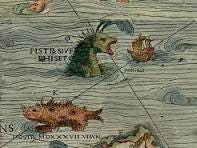
(Here be monsters…)
Core national leaders of the “Coalition of the Willing,” an assemblage of mostly NATO states (minus the US, and Russian hangers on like Hungary and Slovakia), is meeting in Paris today to discuss the future of the Ukraine peace process.
The meeting has been overshadowed by two recent developments: the US raid on Venezuela and the capture of Nicolas Maduro and his wife; and continuing threats made by US officials, including the President, about Greenland.
Both developments have generated tightrope walking scenarios for the key players in the Coalition of the Willing, including Canada’s Prime Minister, Mark Carney.
How close is Kyiv vs. Caracas? At the heart of the dilemma for the Coalition of the Willing is that the future of Ukraine far outweighs concerns about Venezuela. For there to be any just peace settlement for Ukraine, Coalition members know that a US security guarantee and US willingness to serve as a military backstop to European pledges to enforce a peace settlement is vital. This is simply an expression of the current realities of hard power. Keeping the US in play over a Ukraine peace deal was already complicated and fraught. Overt repudiation of the US action in Venezuela potentially threatens future US engagement. On top of that, many Coalition members, including Canada, did not recognize the Maduro government as legitimate, following its manipulation of the National Assembly and the rigging of national election outcomes. None regarded Venezuela as anything less than a failed state that provided opportunities for states that Cuba, Russia and China to exercise influence.
Here is how Prime Minister Carney walked the Venezuela tightrope at a media scrum in Paris today. [1] In response to a question he stated: “from our perspective, removal of an illegitimate, corrupt repressive government or leader, Mr. Maduro, is welcome news. It creates the possibility for democratic transition in Venezuela. We very much support that. We’re available to support that. And we urge that to happen in a peaceful transition and that [is] the best prospect for greater prosperity of the Venezuelan people and to respect the will of the Venezuelan people.”
What this avoided, of course was any reflection on the means used by the United States to remove Maduro from power and any comment on the US President’s claims that his administration will “run Venezuela” and US oil companies will move in to capture Venezuelan oil resources.
But yes, Kyiv is closer than Caracas, even for Ottawa.
How close is Nuuk, Greenland?
Carney met with the Prime Minister of Denmark, Mette Frederiksen, on the sidelines of the Paris talks on January 6. The read-out includes language about their mutual commitment to “enduring support for Ukraine against Russian aggression,” mention of mutual interest in Arctic security, and opportunities for closer security and economic ties between the two countries. Carnery also stressed Canada’s support for the sovereignty and territorial integrity of Denmark, including Greenland. “The future of Greenland is for Greenland and Denmark to determine,” he stated. [2]
The sentiment was also expressed in a joint statement on Greenland issued in Paris by the Coalition of the Willing leaders of France, Germany, Italy, Poland, Spain, the UK and Denmark. Strangely, Canada was not a signatory, though the PM “affirmed” Canada’s support for the declaration. The statement, besides stressing that the future of Greenland was for Denmark and Greenland to decide, also highlighted the ways in which European allies are increasing efforts to maintain Arctic security, with the US as a NATO ally and essential partner. Carney, for his part, emphasised the importance that Canada attached to Arctic security and its efforts to ramp up its Arctic military capabilities.
The Elysee statement cheekily reminded the Americans of the defence agreement signed between it and the Kingdom of Denmark in 1951. [3]
Take that Donald Trump! What has the US President said recently on the matter of Greenland? Following the military success of the Venezuelan operation, he has doubled down on claims about annexing Greenland. He told reporters on board Air Force One on Sunday, January 4, that:
“We need Greenland for a national security situation. It’s so strategic. Right now, Greenland is covered with Russian and Chinese ships all over the place.” [4]
Russian and Chinese ships all over the place in Greenland? That’s on a par with “here be monsters,” and no less mythological.
Trump’s threat occasioned the strongest language yet from both the Greenland Premier, Jens-Frederik Nielsen, and the Danish PM, Mette Frederiksen.
Nielsen posted on social media: :”enough is enough. No more pressure. No more insinuations. No more fantasies about annexation.” [5]
In response to Trump, The Danish PM took a more end-of-days tone. She is quoted in the media as saying, “The American president should be taken seriously when he says he wants Greenland, If the US chooses to attack another NATO country militarily, then everything stops…including the security that has been established since the end of the second world war.” [6]
Nuuk, too, is a little closer than Caracas. Even the end of NATO as we know it might be getting closer.
How close is Washington, D.C? In allied miles, it’s fast receding, but PM Carney and others still face a difficult geopolitical reality.
Here is how the PM put it in Paris. NATO provides security for all, Greenland included. More security is on the way….”We stand with Denmark. We stand with Greenland. Our closest partnership is with the United States and we’ll work with everybody to make sure that we move forward together.”
Remember the old saying. Keep your friends close, and your enemies closer.
And watch out for monsters, real or imagined.
[1] Transcript of media scrum, Paris, January 6, 2026, shared with me by a media colleague
[2] Prime Minister’s Office, “Prime Minister Carney meets with Prime Minister of Denmark Metter Frederiksen,” January 6, 2026, https://www.newswire.ca/news-releases/readout-prime-minister-carney-meets-with-prime-minister-of-denmark-mette-frederiksen-821837619.html
[3] The Elysee, Paris, France, “Joint Statement on Greenland,” January 6, 2026, https://www.elysee.fr/en/emmanuel-macron/2026/01/06/joint-statement-on-greenland
[4] Politico, “Trump’s Venezuela attack deepens Europe’s Greenland Dilemma,” January 6, 2025, https://www.politico.eu/article/donald-trump-venezuela-europe-greenland-dilemma-threats-dispute-territory-nato/?utm_source=email&utm_medium=alert&utm_campaign=Trump’s%20Venezuela%20attack%20deepens%20Europe’s%20Greenland%20dilemma
[5] Ibid
[6] ibid
An excellent account of events, I'll add further comment later, but for now:
[Strangely, Canada was not a signatory,] This is very odd, but I think there's a whole story of its own behind this.
Keyed by a comment on a TimesRadio episode earlier (I'll find and link later). a claim was made by a US academic that (gist) "Canada also wanted to buy Greenland". I had to dig on that, first I'd ever heard of "buy" being used in the approach. But in doing an extensive delve into it via web-search, I see this: Brave AI search for "canada wanted to purchase greenland" (Result truncated for brevity)
[...][While Canada has not made a purchase offer, historical records show that proposals to acquire Greenland for Canada date back over a century, including a 1917 British plan to secure a right of first refusal for Canada.
More recently, a 2021 survey indicated that 85% of Greenlanders expressed interest in a closer relationship with Canada, though Canada has not acted on this.
In 1909, American Robert Stein proposed a complex diplomatic scheme in which Canada would acquire Greenland without cost, through a series of territorial exchanges involving Denmark, Germany, and the United States.
In 1917, the British Empire considered purchasing Greenland for Canada to prevent U.S. acquisition, and reportedly secured a right of first refusal from Denmark, though the legal validity of this claim remains uncertain.
Canada’s interest in Greenland has been framed historically around strategic control of Baffin Bay, Arctic resource development, and strengthening ties with Inuit communities across the North Atlantic.
Despite these historical proposals, Canada has not taken any action to purchase Greenland, and current Canadian policy does not include such a plan.
Greenland’s self-governing status since 2009 means that Denmark cannot unilaterally sell the territory, and any change in sovereignty would require Greenland’s consent.]
[...]
Let's say for now that 'Canada and Denmark have a special relationship' on this, and that in part might have more than a small bearing on Carney's appearing and speaking separately on the matter. I'm watching the media closely for more clues on this.
Btw: Miller is such a ^$*^#@g moron. A quick web-search would show him that Greenland's *European* history far predates that of the US. It's been the domain of the Danes, then Norwegians, then Danes again (courtesy of Sweden) long before the US was established. The real question for Greenland is in fact whether the Europeans predated the Thules...
Seems the US regime is doubling down:
The White House said on Tuesday: "The president and his team are discussing a range of options to pursue this important foreign policy goal, and of course, utilizing the US military is always an option at the Commander-in-Chief's disposal." (Source: BBC)