JEF: We're Just Friends
Or, the strange case of a non-relationship

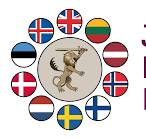

JEF—“Joint Expeditionary Force”--is a military coalition of NATO member states probably unknown to most Canadians. [i] Its been around for over a decade but Canada has never been a member, just an occasional dance partner. The reasons for this odd relationship between Canada and like-mindeds is puzzling and obscure, but JEF is back in the news after PM Mark Carney participated in a virtual meeting of the JEF while in Halifax to make military spending announcements (we hit 2% of GDP!). [ii]
The PM was a special guest of the president of Finland, Alexander Stubb, who hosted the JEF meeting. The PMO read-out indicated that the JEF discussion focused on the Arctic, which allowed Carney to emphasize Canada’s own commitment to Arctic security and its major boost to defence spending. While the PM noted an “enduring partnership” with JEF, it seems no promises were made about Canada joining the coalition, which is led by the UK and includes all the Nordic and Baltic countries plus Iceland and the Netherlands. [iii] JEF’s geographic reach thus stretches from the European High North, adjacent to Russia, across the Atlantic to Iceland and Greenland.
JEF reaches to Canada’s Arctic doorstep, yet we are not a member.
I wrote about JEF in an earlier substack on October 19, 2025, “What is the JEF and where is Canada.” [iv] The occasion was the wrap-up of major JEF exercises in Europe, in which Canada had taken part with some CF-18s. I argued at the time that Canada should become a full member. The case still stands.
In fact, it goes back a ways, to the origins of the JEF. Canada was invited to join JEF at its inception, by Britain in 2014, in the aftermath of the Russian take-over of Crimea. There were apparently even incentives offered in the form of having JEF do a lot of its training at a major CAF base at Wainwright, Alberta. Following discussions at the NATO summit in Wales in 2014, the then Harper government said it wanted more time to study the idea. The Chief of the Defence Staff, General Jonathan Vance, was worried about over-commitment, particularly for training exercises, on the part of the Canadian military. [v]
Over a decade has passed, the JEF has acquired greater viability and relevance, especially as a military coalition that trains and operates together, confronting potential Russian aggression, threats to the Arctic, and dealing with hybrid warfare techniques, including drone incursions, cyber attacks, information warfare, undersea cable cutting and the surreptitious transport of oil and natural gas by the Russian “shadow tanker” oil fleet.
The JEF focus on Arctic security, the lessons that Canada could learn from the JEF in dealing with hybrid warfare threats, the experience of working with many of the JEF members in the Canadian-led multinational brigade in Latvia, are all good reasons for Canada seeking and accepting membership in the JEF. Membership in the JEF might also support the new Defence Industrial Strategy, both in cementing partnerships for the acquisition of military hardware, and in opening up new export markets and opportunities for what is meant to be an expanding Canadian defence industrial base.
Perhaps the strongest reason at this point in time for Canada joining the JEF is the opportunity to diversify away from defence reliance on the United States, rapidly moving from being an unreliable ally to being a dangerous one. Joining the JEF would help solidify Canadian security arrangements with transatlantic partners, all with a shared interest in Arctic security and a shared determination (not shared by the United States) to confront and deter Putin’s Russia.
If the Carney government is looking for other kinds of wins in joining JEF, there are two that are imaginable. One harkens back to the use of Canadian bases for JEF training. The other relates to the effort to play a leadership role and secure a Canadian city as the headquarters of the proposed Defence, Security and Resilience Bank (DSRB). [vi] The DSRB is designed to be a sort of World Bank lending institution for military spending.
As two British commentators noted for the Royal United Services Institute, “Canada is therefore set to become the most important ally the JEF never had.” [vii]
[i] The joint Expeditionary Force has a website, https://jefnations.org
[ii] Murray Brewster, CBC, “Canada clears NATO’s 2% bar—after years of lagging and a last-minute lift,” March 26, 2026, https://www.cbc.ca/news/politics/canada-nato-defence-spending-9.7142615
[iii] Prime Minister’s Office, “Prime Minister Carney participates in a virtual meeting of the Joint Expeditionary Force,” March 26, 2026, https://www.pm.gc.ca/en/news/readouts/2026/03/26/prime-minister-carney-participates-virtual-meeting-joint-expeditionary
[iv] Wesley Wark, “What is the JEF and where is Canada,” October 19, 2025, https://wesleywark.substack.com/p/what-is-the-jef-and-where-is-canada
[v] The Canadian Press, “Canada decides against joining British-led NATO-UN response force,” January 9, 2015, https://www.ctvnews.ca/politics/article/canada-decides-against-joining-british-led-nato-un-response-force/
[vi] Department of Finance, “Canada hosts partners to advance establishment of the Defence, Security and Resilience Bank,” March 23, 2026, https://www.canada.ca/en/department-finance/news/2026/03/canada-hosts-partners-to-advance-establishment-of-the-defence-security-and-resilience-bank.html
[vii] Ed Arnold and B.Gen (ret) Robbie Boyd, “’Oceans 11’: the Case for Canada Joining the Joint Expeditionary Force,” Royal United Services Institute, 28 April 2025, https://www.rusi.org/explore-our-research/publications/commentary/oceans-11-case-canada-joining-joint-expeditionary-force
The conversation feels incomplete without a cost side. Membership presumably means real exercise commitments and interoperability investment, which was the concern in 2014. Perhaps that’s changed. I don’t know. Or maybe we’re just more willing to bear those costs now?
A good article Wesley and I am in favour of joining JEF. We must diversify Forces engagement from mainly US/Canadian to a broader arrangement with Nordic nations et al.
I took the liberty, once again, to block the comments from the ever present Cuban/conspiracy inspired commenter.